
A doctoral student at Northern Arizona University received an NIH fellowship for flexible AFO research in children with cerebral palsy. Here is what the award funds and what the design problem is.
An NIH predoctoral fellowship at NAU targets flexible ankle-foot orthosis design for children with cerebral palsy. The fellowship is a training grant, not a project grant: this is what that distinction means, and why the AFO design problem for this population is not yet solved.
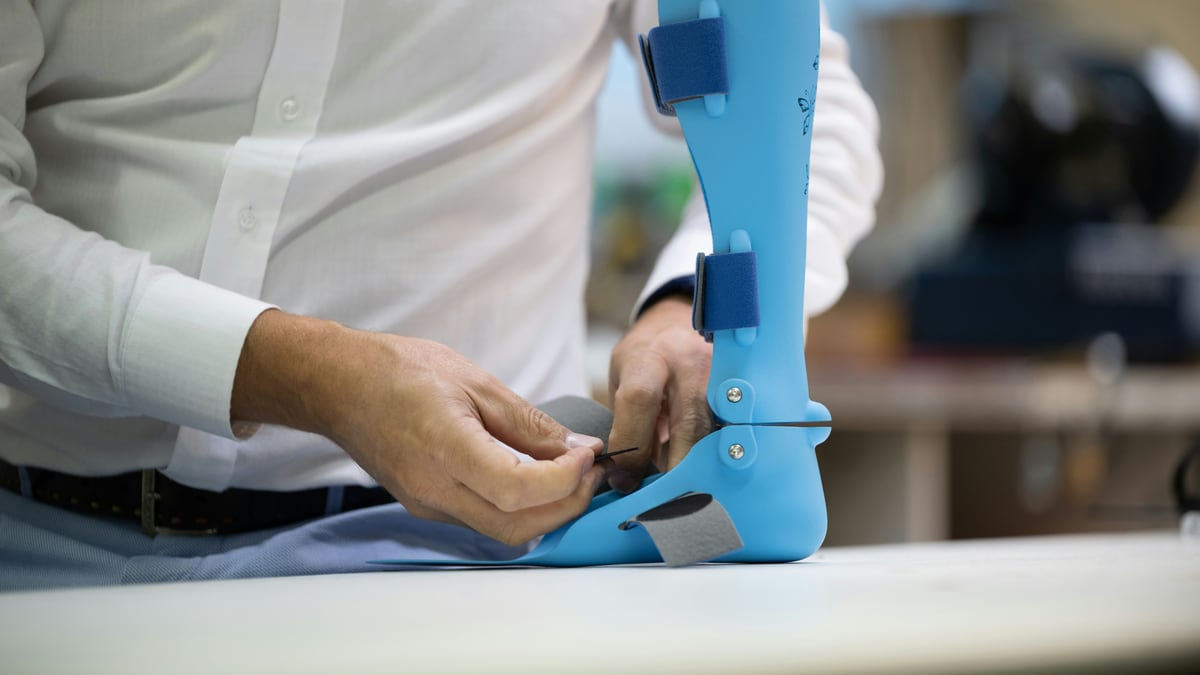
A doctoral student at Northern Arizona University received an NIH award for work on a flexible ankle-foot orthosis for children with cerebral palsy, per reporting in The O&P EDGE.
The announcement establishes that an NIH peer review panel evaluated a predoctoral research training plan focused on flexible AFO development and found it competitive for funding. That judgment, that the research direction, the training environment, and the student’s preparation meet federal standards for predoctoral fellowship support, is the specific thing an NIH fellowship signals. It does not signal a finished device or an imminent clinical option.
What a predoctoral fellowship funds
NIH predoctoral fellowships, most commonly the F31 Ruth L. Kirschstein National Research Service Award, are training grants. They fund a student’s stipend, health insurance, and direct training costs. They do not fund a project budget in the way an R-series research grant would. The research is the vehicle for training rather than the primary deliverable.
This distinction matters for reading the announcement correctly. The purpose of an F31 is to produce a researcher: someone with a defended dissertation, reproducible methods, and the foundation for an independent career. The preliminary data and published papers that come out of a funded dissertation can later support larger grant applications: the project-level funding that would take a design into a clinical trial, or toward a commercially viable device.
A fellowship at this stage does not indicate a near-term change in what is available to patients or practitioners. It indicates that someone at the beginning of a research career is developing knowledge in a specific area under NIH-funded oversight, in an environment that survived federal peer review.
The AFO design problem in children with cerebral palsy
Cerebral palsy commonly produces spastic muscle tone that alters gait. At the ankle, the most visible effect is equinus, a persistent toe-down foot position driven by tight or overactive calf musculature, though CP gait also involves crouch patterns, scissor gait, and other movement abnormalities that vary by type and severity. Ankle-foot orthoses are among the most commonly prescribed non-surgical interventions for managing these patterns in children.
The design problem is not straightforward. A rigid AFO, a fixed carbon fiber or polypropylene shell that immobilizes the ankle joint, controls abnormal motion effectively. But it also eliminates the ankle rocker mechanism that contributes to push-off and energy return during walking. A child wearing a fully rigid AFO does not get the normal ankle motion that is part of typical gait; the device prevents the pathological movement but also removes something useful.
Flexible AFOs, also called dynamic or hinged AFOs depending on their construction, are designed to allow controlled ankle motion while still providing support and limiting pathological range. The engineering challenge is calibrating stiffness: the device needs to resist the spastic pull without eliminating functional movement. That calibration varies by the child’s weight, gait pattern, severity of spasticity, and developmental stage. And children grow, which means devices need to be replaced regularly and re-fitted to a changing body.
The research question implied by the fellowship, how to engineer a flexible AFO that performs consistently across these variables, is not a new one. Published research on hinged and dynamic AFOs for CP shows mixed results depending on measurement method, population, and how outcomes are defined. A doctoral-level investigation designed with NIH peer review input would aim to add controlled, reproducible data to that literature, with enough methodological specificity to be useful for future larger studies.
NAU’s position in this research
Northern Arizona University has an orthotic and prosthetic program and has produced faculty engaged in clinical and technical research. An NIH predoctoral fellowship situates a student’s doctoral work within NIH’s expectations for predoctoral training: a research mentor with demonstrated expertise, institutional infrastructure for the work, and a training plan specific enough to survive peer review.
Doctoral research on AFO design does not necessarily originate from within an O&P department; bioengineering, kinesiology, or biomedical science programs can house this work. The relevant question is whether the environment provides the mentorship, equipment, and clinical access needed to conduct rigorous design and testing research with a pediatric population: access to motion analysis, patient recruitment pathways, and the clinical expertise to interpret gait data in context.
What to watch for
The practical output of a predoctoral fellowship is a dissertation, eventually a peer-reviewed publication or two, and a researcher who will either continue in academic research or move into clinical practice or industry with more developed skills in the area. The AFO design work may support a future grant application for a larger study or pilot trial.
Whether findings from doctoral-level AFO research eventually enter the literature that practitioners and payers reference depends on whether the methods are reproducible, the outcomes well-chosen, and the results specific enough to be useful under clinical conditions. Research at this stage is input to a pipeline that takes years to complete.
The announcement is useful for two purposes: tracking where NIH funding is going in the O&P and pediatric rehabilitation research space, and recognizing that the field is producing researchers trained specifically on pediatric orthotic design questions. A flexible AFO designed to perform well for children with CP would address a problem that current options handle incompletely. Whether this fellowship contributes to that solution depends on what comes out of the dissertation, and then what happens after.
Amputee News does not provide individualized medical, legal, or benefits advice. Research findings described in coverage may not reflect current clinical practice; consult your child’s care team and orthotist for guidance relevant to their specific situation.
Source notebook: This reporting draws on The O&P EDGE: NIH Fellowship Awarded for AFO Development, August 2026 ↗. We link out so you can follow the receipts.